Attachment styles during illness
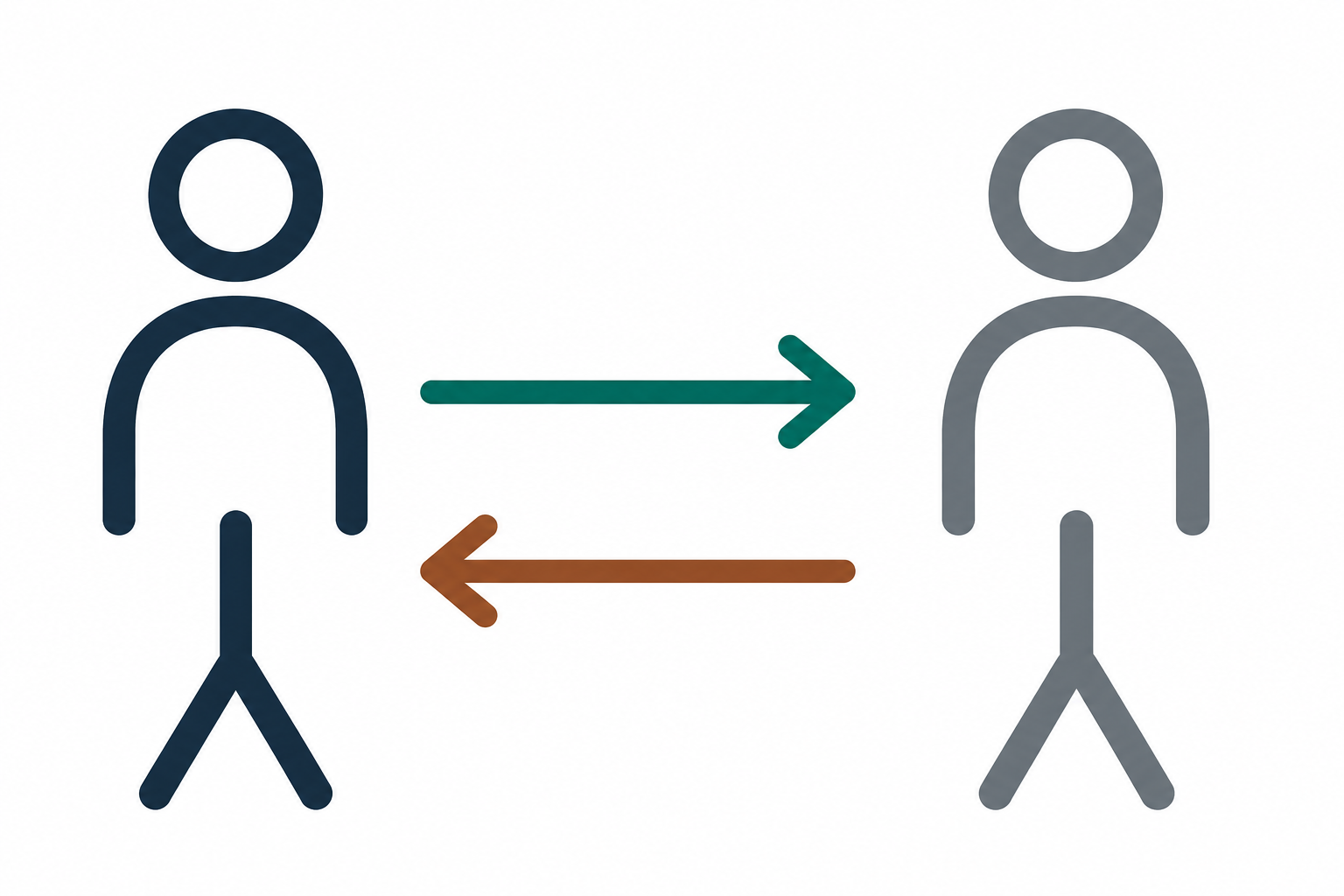
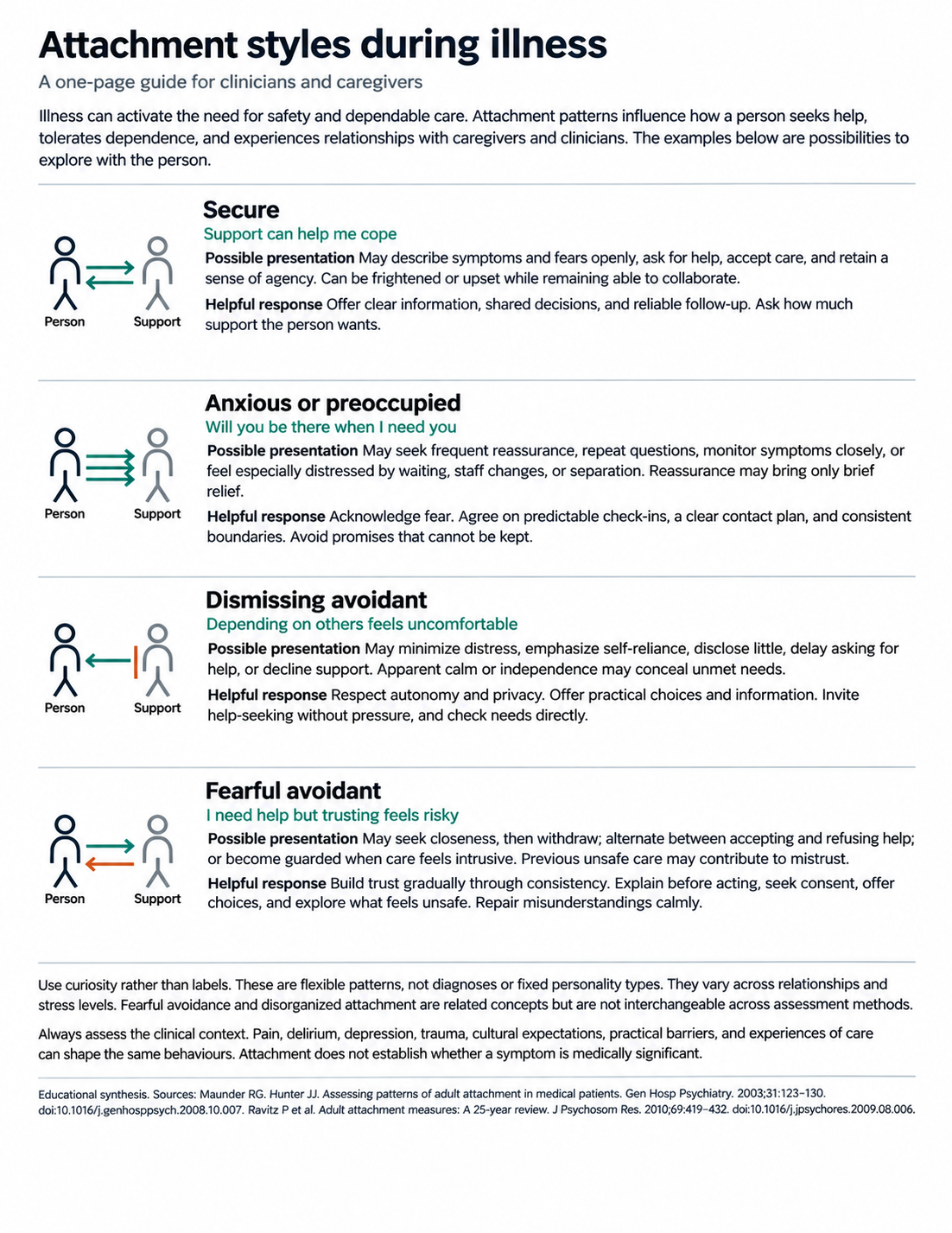
Illness can activate the need for safety and dependable care. Attachment patterns influence how a person seeks help, tolerates dependence, and experiences relationships with caregivers and clinicians. Some people reach for reassurance, while others pull back or feel uneasy depending on others. Attachment theory offers a compassionate way to understand these responses.
The examples below demonstrate how four attachment patterns may appear during illness and how clinicians and caregivers can respond. It invites curiosity about what helps each person feel safe, understood, and supported.
About the Author
Dr Gavril Hercz

Dr. Gavril Hercz is a nephrologist at Hennick Humber Hospital and Associate Professor of Medicine, University of Toronto. He completed his psychoanalytic training at the Toronto Psychoanalytic Institute and is a member of the Canadian Psychoanalytic Society. His major area of interest is the impact of physical illness on patients, families, and caregivers.
The examples below demonstrate how four attachment patterns may appear during illness and how clinicians and caregivers can respond. It invites curiosity about what helps each person feel safe, understood, and supported.