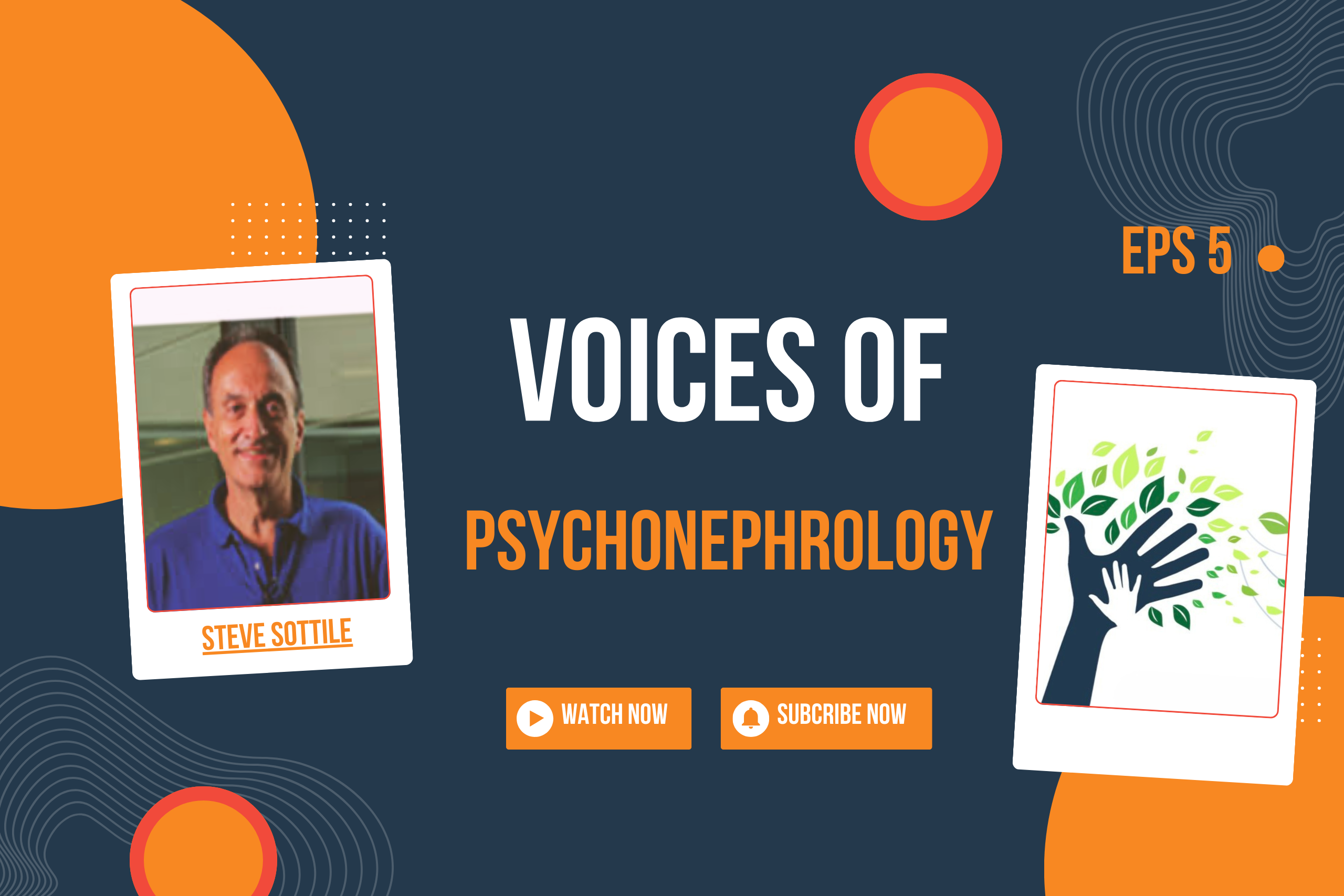
You Only Get It Once You’ve Lived It: Steve’s Journey
What does it really mean to care for someone with PKD… before you know it, you’ll end up dealing with the same thing yourself?
Steve found out the long way around.
For years, he watched his mom struggle with anxiety, pain, unusual symptoms, and eventually dialysis — all without realizing he’d inherited PKD too. Growing up, people brushed her off as a worrier or a hypochondriac. One day, she’d have sky-high blood pressure, the next, she’d be “wiped out, scared of the hospital, scared of dialysis, and frustrated because doctors didn’t understand her.
For the family, it became easy to think, that’s just Mom.
Everything changed once Steve became her caregiver.
He finally saw the fear in her face during those early dialysis sessions — the staff rushing by, the cold rooms, the machines, the language barriers, the pressure to smile and agree even when she was completely lost. Suddenly, he was the translator, the advocate, the one stepping in when the medical system rushed her.
Then, years later, he ended up on dialysis himself!
And that’s when everything clicked:
The cramps that hit out of nowhere
The bone-dry dehydration.
The alarms in the middle of the night
The stress of removing too much fluid… or not enough
The nonstop attention to intake of food and fluids, fatigue, dry skin — all of it
The feeling of being tied to a machine that runs your life
“Suddenly,” Steve says, “I understood every single thing she used to complain about. I thought she was exaggerating. She wasn’t. She was just trying to get through it.”
He now sees dialysis as a constant juggling act — change one thing, and three other things happen. And for people dealing with language barriers or limited health literacy, that juggling act is ten times harder.
But there was something very positivethat came out of it: community.
When he trained for home hemodialysis, he sat next to people who had been doing it for months or years. They talked about the cramps, the dizziness, the fear of diminished strength mid-treatment, and the exhaustion of carrying too much fluid. Hearing them — not just the medical staff — made the biggest difference.
“I wish someone had pushed us to talk to another patient earlier,” he says. “Not a pamphlet. Not a doctor. A patient.”
Now Steve volunteers his time so families starting this journey don’t have to navigate alone; because hearing from someone who’s lived it can turn fear into something more manageable — and remind people they’re not alone.
His story shows something simple and true:
Kidney disease isn’t just a physical problem. It affects us emotionally, mentally, and socially. These we may dismiss at first, but they often end up being the things we appreciate the most once we’ve lived through them ourselves.
The interview deals with various topics in depth, so it is divided into two parts.
About the Author
Samaira

Samaira Rana is a social media assistant who creates engaging video content and conducts interviews with community members to share real-life perspectives on the effects of kidney disease. Currently a high school student, she enjoys reading and writing, which inspire her creativity in digital storytelling.
What does it really mean to care for someone with PKD… before you know it, you’ll end up dealing with the same thing yourself? Steve found out the long way [...]