When the Dead Speak Back: What Digital Afterlives Reveal About Grief, Memory, and Attachment
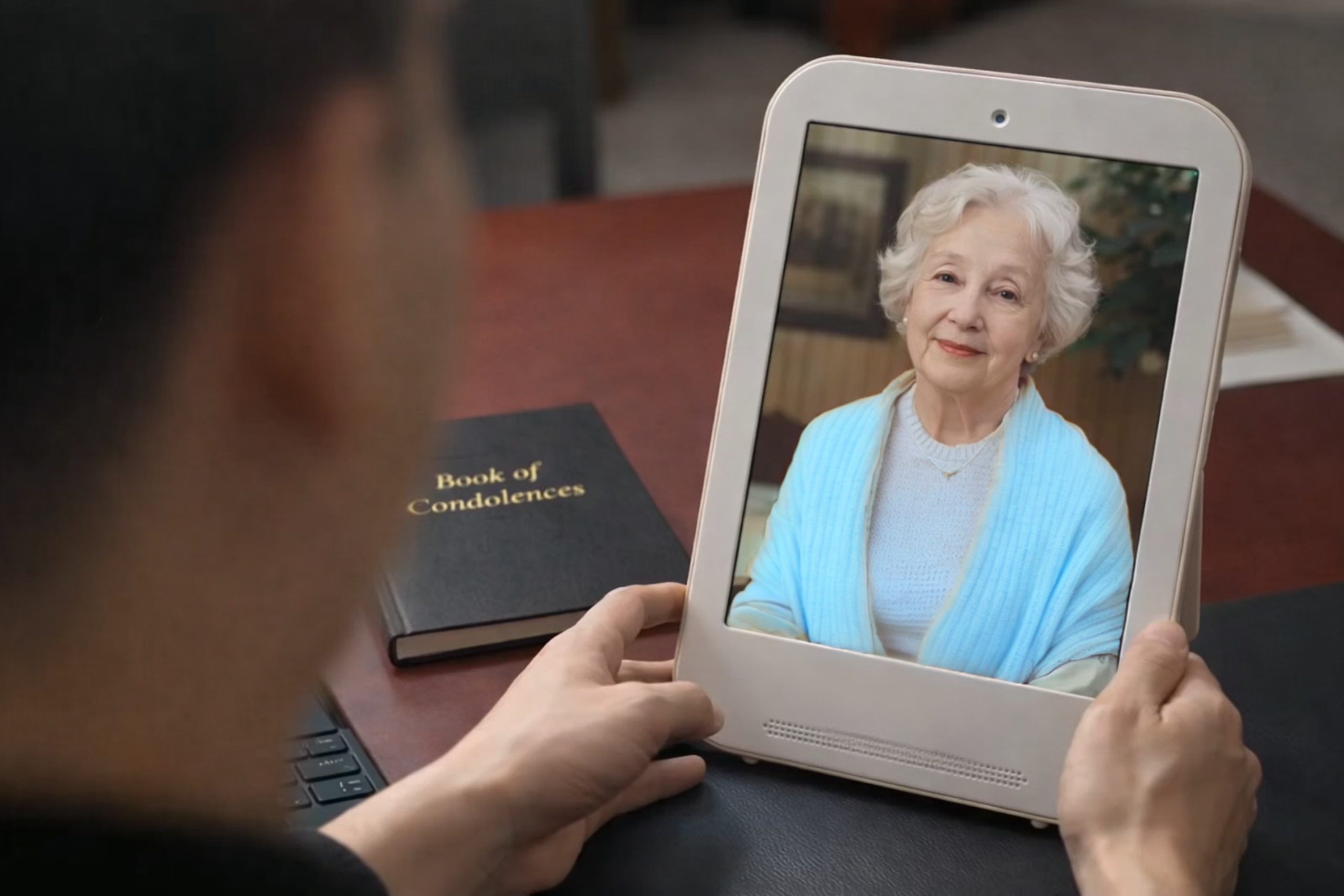
In recent years, artificial intelligence has quietly crossed a threshold once reserved for myth and religion: it has begun to offer ways for the dead to “remain.” Through chatbots trained on text messages, emails, voice recordings, and social media archives, people can now interact with digital simulations of those who have died. Startups frame these tools as comfort, legacy preservation, or emotional support, while families experiment with them as a way of easing grief or maintaining connection. What was once limited to photographs, letters, and static recordings has become dynamic and responsive. The dead do not merely leave traces; they appear to answer back.
A quiet but profound shift is underway in how humans relate to loss. With enough personal data, AI systems can generate responses that sound uncannily familiar. For some, this feels soothing. For others, unsettling. The question is no longer whether we can recreate the voices of the dead, but whether we should—and what this impulse reveals about how we mourn.
At first glance, digital replicas promise relief. Grief is disorienting; it ruptures continuity. The deceased vanish not only physically but relationally. The everyday rituals of checking in, seeking advice, or hearing a familiar voice collapse overnight. A chatbot trained on a loved one’s words appears to offer a bridge across that rupture—a way to soften the finality that loss imposes.
Yet grief has never been only about absence. It is also about transformation. Psychoanalytic traditions understand mourning as a process of internalization: the loved one is gradually taken inside, reshaped as memory, influence, and inner presence. This process is uneven and emotionally taxing. It involves longing, anger, denial, and despair. Crucially, it also requires accepting that the external relationship has ended, even as the internal one continues.
Digital resurrection unsettles this boundary.
When a grieving person converses with an AI version of the deceased, they are neither simply remembering nor fully relating. They are engaging with a third entity: a probabilistic echo that responds in ways the deceased might have, but never actually did. This can feel comforting, but it risks freezing grief in suspension—neither presence nor absence, neither goodbye nor integration.
There is a psychological parallel here with unresolved mourning. When grief cannot move forward, the mourner may cling to objects or fantasies that preserve the illusion of ongoing contact. While these strategies can temporarily soothe pain, they often delay adaptation. A chatbot that is always available, always responsive, and never withdraws may function less as support and more as emotional anesthesia.
Ethical questions follow closely behind. Who controls these digital afterlives? Who decides which aspects of a person’s voice or values are preserved—and which are erased? A living person is contradictory and evolving. A digital simulation is static, curated, and optimized for reassurance. Over time, this version risks replacing the messier, ambivalent memory of the real person with a smoother substitute.
Consent is also at stake. Most people whose data could be used to create posthumous avatars never agreed to such use. Words written casually or privately may be repurposed into permanent, interactive artifacts. The dead lose the ability to refuse, revise, or withdraw. This asymmetry should give us pause.
Still, to dismiss these technologies outright would be too simple. Humans have always sought ways to keep the dead close. Portraits, letters, voice recordings, and imagined conversations are not new. What is new is interactivity—the sense that the deceased can respond, adapt, and participate.
Used with intention and limits, such tools may have therapeutic value. Time-limited, structured engagement with a digital voice might help articulate unresolved feelings—love unexpressed, anger left unsaid, questions without answers. In clinical contexts, carefully designed simulations could support grief work, much like letter-writing or guided imagery already do.
The difference lies in containment. Grief needs boundaries. Without them, it can become endless repetition. A digital presence that never fades risks undermining the work mourning requires.
Perhaps the deeper issue is cultural rather than technological. Modern societies struggle with death. We medicalize it, hide it, and euphemize it. We value productivity and emotional control. In that context, a tool that dulls the pain of loss—without asking us to sit with it—can feel irresistible.
But grief is not a problem to be solved. It is a process to be lived through.
The dead do not need to speak back for us to remain connected to them. Their influence persists in language, values, and inner dialogue. Mourning is not about preserving the voice exactly as it was, but allowing it to change form—becoming memory, meaning, and quiet presence rather than constant interaction.
Digital afterlives confront us with an uncomfortable truth: not everything that is possible is psychologically benign. The measure of progress is not how convincingly we can imitate the dead, but how well we support the living in learning to carry loss without being consumed by it.
In the end, the question may not be whether chatbots of the dead are brilliant or terrible. It may be whether we can tolerate absence—and relearn how to live alongside it.
About the Author
Dr Gavril Hercz

Dr. Gavril Hercz is a nephrologist at Humber River Health and Associate Professor of Medicine, University of Toronto. He completed his psychoanalytic training at the Toronto Psychoanalytic Institute and is a member of the Canadian Psychoanalytic Society. His major area of interest is the impact of physical illness on patients, families, and caregivers.
When grief cannot move forward, the mourner may cling to objects or fantasies that preserve the illusion of ongoing contact.