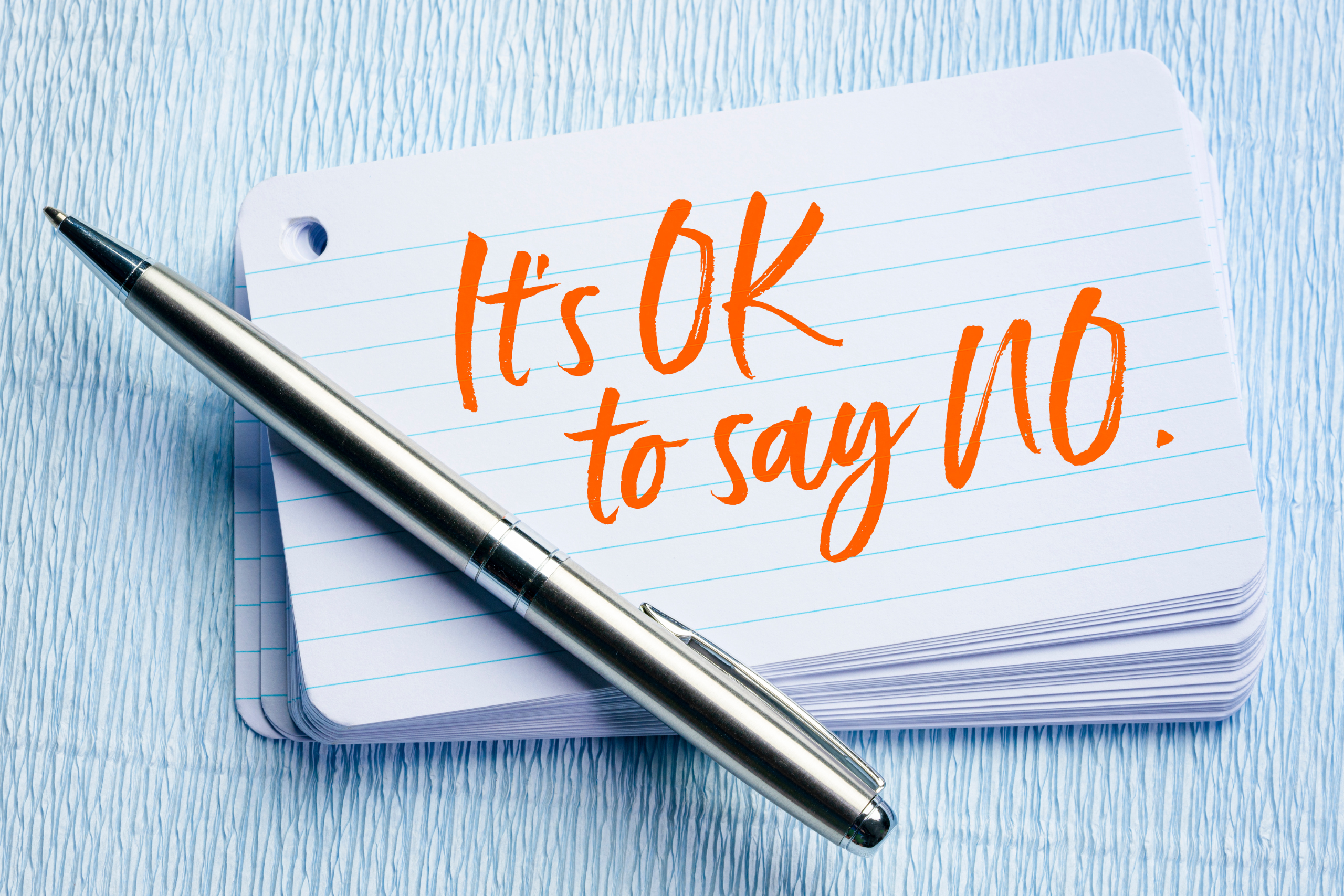
No
Saying “no” is one of the simplest words to utter, yet for many people in health care—both those providing treatment and those receiving it—it can feel emotionally complicated. The pressure to comply, to be agreeable, or to avoid conflict is deeply ingrained. Many of us were taught early in life that harmony depends on saying yes, even when our inner sense resists. That early conditioning often persists into adulthood and shows itself in clinical settings, where the stakes can feel especially high.
Research shows that individuals frequently agree to requests they would prefer to refuse, not because they believe in the decision, but because they fear how refusal might be interpreted. They worry that pushing back suggests distrust, a lack of cooperation, or disrespect. This emotional discomfort can make even simple boundary-setting feel fraught. Many people also imagine that resisting a request must be confrontational, when in reality it can be a calm, thoughtful expression of personal or professional integrity.
The costs of habitual yes-saying are significant. Patients may agree to procedures or recommendations that feel confusing, excessive, or emotionally overwhelming. Some hesitate to voice uncertainties because they fear burdening their clinician or appearing ungrateful or even fearing rejected abandonment. Others may accept treatments without fully understanding the alternatives simply because they do not feel comfortable asking questions. When people suppress their preferences or concerns, opportunities for shared decision-making are lost, and important information that could improve care may never be discussed.
Health professionals face similar challenges. In many clinical environments, implicit expectations reward self-sacrifice, perfectionism, and constant availability. Physicians, nurses, therapists, and other clinicians often stretch beyond their limits by accepting additional responsibilities, responding to after-hours messages, or taking on emotional burdens that exceed what they can sustainably carry. Over time, these patterns contribute to fatigue, moral distress, and burnout. When boundaries become blurred, the quality of care may suffer, not because clinicians care less, but because they have less emotional and physical capacity to give.
Learning to say no is not about becoming difficult or disengaged. Rather, it is about aligning actions with one’s values, responsibilities, and well-being. A thoughtful refusal often strengthens rather than weakens relationships. Patients who feel comfortable expressing their wishes help clinicians better understand what matters most to them. Clinicians who communicate their limits honestly create realistic expectations and model healthy professional behaviour. In both situations, openness builds trust.
Developing this ability takes practice. Like any communication skill, boundary-setting becomes easier with repetition. Beginning with low-stakes situations can build confidence. Declining a minor request, expressing a preference, or respectfully correcting a misunderstanding helps develop the confidence needed when more important decisions arise. Each small success reinforces the understanding that saying no does not inevitably damage relationships.
Preparing in advance can also make difficult conversations easier. Thinking through likely situations, rehearsing responses, or discussing them with a trusted colleague or family member reduces anxiety when the moment arrives. Reflecting on one’s values is equally important. Whether the priority is patient safety, professional ethics, personal health, or family commitments, a clear understanding of what matters most provides a steady foundation for making difficult decisions.
The language we use matters. Clear, respectful “I” statements allow people to communicate boundaries without blame or confrontation. Phrases such as, “I need more time to think about this,” “I don’t feel comfortable proceeding until I understand my options,” or “I’m not able to take on additional responsibilities right now,” communicate limits while preserving respect. Such conversations invite dialogue rather than conflict and often encourage others to respond with understanding rather than defensiveness.
Support from others makes boundary-setting easier. Patients may benefit from bringing a trusted family member or friend to important appointments, particularly when complex decisions are involved. A second less stressed individual can help ask questions, clarify information, and reinforce the patient’s wishes. Health professionals benefit from supportive colleagues, mentors, and supervisors who recognize that maintaining boundaries is an essential component of good clinical practice rather than a sign of weakness or lack of commitment.
Feelings of guilt frequently accompany early attempts to say no. Many people assume that others will be disappointed, offended, or angry. In reality, these fears are often greater than the actual consequences. Most people respect honest, thoughtful communication, particularly when it is delivered with empathy and clarity. As individuals gain experience asserting healthy boundaries, their confidence grows and the emotional discomfort gradually diminishes.
Healthy boundaries ultimately benefit everyone involved in health care. Patients become more active participants in their care, ask better questions, and make decisions that better reflect their values and goals. Clinicians preserve the emotional energy needed to provide compassionate, attentive care over many years rather than becoming overwhelmed by unrealistic expectations. Mutual respect replaces silent resentment, and conversations become more authentic.
Perhaps the greatest gift of saying no is that it creates space for a more genuine yes. When patients agree to a treatment after having their questions answered and their concerns heard, their commitment is stronger. When clinicians accept responsibilities that genuinely align with their professional role and personal capacity, they are more present, engaged, and effective. Boundaries do not diminish compassion; they protect it.
In health care, saying no should never be viewed simply as refusal. At its best, it is an expression of honesty, self-respect, and thoughtful judgment. Whether spoken by a patient seeking to preserve autonomy or by a practitioner striving to provide sustainable, ethical care, a well-considered no can strengthen relationships, improve communication, and ultimately contribute to better care for everyone involved.
About the Author
Dr Gavril Hercz

Dr. Gavril Hercz is a nephrologist at Humber River Health and Associate Professor of Medicine, University of Toronto. He completed his psychoanalytic training at the Toronto Psychoanalytic Institute and is a member of the Canadian Psychoanalytic Society. His major area of interest is the impact of physical illness on patients, families, and caregivers.
Saying “no” is one of the simplest words to utter, yet for many people in health care—both those providing treatment and those receiving it—it can feel emotionally complicated. The pressure [...]