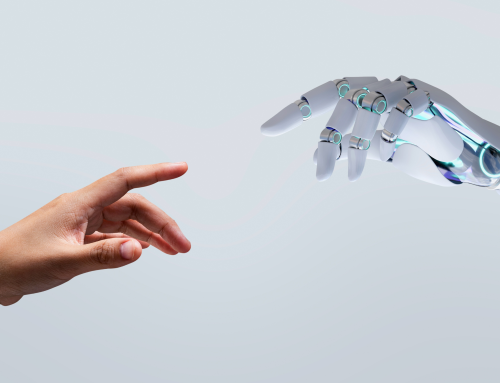
Death of the consult note?
In the daily rhythm of modern clinical practice, a quiet transformation is underway — one that many clinicians may barely register until something essential feels different. The traditional consult note, once dictated and carefully transcribed, is fading. In its place stand templated documentation systems, auto-populated fields, and increasingly sophisticated speech-to-text or ambient artificial intelligence tools. The shift appears technical, even benign. It promises efficiency, cost savings, and relief from clerical burden. Yet beneath this operational change lies something more profound: a transformation in how clinicians think, reason, and construct meaning.
For decades, dictation paired with human transcription created an unanticipated but powerful cognitive space. When clinicians dictated a consult note, they were required to pause. They had to gather the patient’s story, sift through data, weigh uncertainty, and articulate an assessment in coherent language. Dictation was not merely recording; it was synthesis. The act of speaking one’s reasoning out loud — knowing it would be transcribed faithfully — demanded clarity. It required decisions about emphasis: What matters most? What is uncertain? What is the organizing hypothesis?
In contrast, many contemporary electronic notes begin almost fully formed. Problem lists auto-populate with years of accumulated diagnoses. Review-of-systems sections can be completed with a series of clicks. Laboratory values cascade into the record automatically. Templates anticipate structure before thought has crystallized. The clinician’s task shifts subtly from composing a narrative to editing pre-assembled fragments. The note risks becoming a warehouse of comprehensive data rather than a vessel of reasoning.
This shift affects more than aesthetics. Clinical notes have long functioned as a form of thinking in public. They reveal how a clinician arrives at an impression, how competing possibilities are ranked, how ambiguity is tolerated. A well-crafted consult note can guide the next physician through the terrain of uncertainty. It can teach trainees how to prioritize, how to recognize patterns, how to justify a plan. When documentation devolves into templated repetition, that cognitive process is diminished.
There is also a psychological dimension to this change. The pause required by dictation created a small, protected space between encounter and action. In that interval, clinicians metabolized complexity. They organized emotional responses. They translated the patient’s lived experience into medical language without entirely stripping it of humanity. In high-pressure environments — dialysis units, oncology wards, intensive care settings — such moments of internal ordering are not luxuries; they are stabilizing rituals. Removing them may increase efficiency, but it risks eroding a subtle form of containment that supports professional resilience.
None of this is an argument for nostalgia. Modern documentation systems respond to genuine needs. Typing into electronic health records can consume hours that might otherwise be spent at the bedside. Ambient AI tools offer the promise of reducing clerical burden and perhaps even restoring the physical connections that have become rarer or abbreviated. When technology truly reduces friction, it can be humane.
The concern arises when automation does more than assist — when it begins to think for us. Templates encourage completion rather than contemplation. Auto-populated assessments can perpetuate outdated diagnoses that no one has re-examined. The pressure to produce thorough documentation may paradoxically obscure clinical insight. Length expands; clarity contracts.
This evolution also shapes how trainees learn. Young clinicians increasingly encounter notes that are dense but conceptually flat. They may see exhaustive lists of problems without witnessing the intellectual choreography that organizes them. Clinical reasoning becomes implicit, hidden beneath checkboxes. If documentation is one of the main artifacts through which medical thinking is transmitted, its flattening has educational consequences.
There is an ethical layer as well. Patients deserve records that reflect thoughtful engagement rather than mechanical completion. A narrative assessment signals that someone has wrestled with their complexity. It demonstrates that uncertainty has been acknowledged rather than buried beneath standardized phrasing. When notes read as generic composites, patients risk feeling interchangeable — another chart among many.
The challenge, then, is not to abandon technological progress but to integrate it without surrendering the reflective core of practice. Clinicians can deliberately reclaim space within templates to articulate reasoning in their own words. Educators can insist that trainees verbalize assessments before documenting them. Clinical teams can preserve forums — case conferences, bedside discussions, morning reports — where narrative reasoning remains central. Even within digital systems, it is possible to protect a paragraph that truly synthesizes rather than summarizes.
Medicine has always balanced art and science. Documentation sits precisely at that intersection. The current transformation in note-writing challenges clinicians to decide what they value: speed alone, or speed coupled with depth. The traditional consult note may be fading in form, but its formulation — deliberate reasoning made visible — need not vanish.
In an era defined by acceleration, protecting even small spaces for reflection and synthesis may prove essential. The consult note once created such a space almost inadvertently. The task now is to recreate that pause — consciously — within the systems that define contemporary care.
About the Author
Dr Gavril Hercz

Dr. Gavril Hercz is a nephrologist at Humber River Health and Associate Professor of Medicine, University of Toronto. He completed his psychoanalytic training at the Toronto Psychoanalytic Institute and is a member of the Canadian Psychoanalytic Society. His major area of interest is the impact of physical illness on patients, families, and caregivers.
Ambient AI tools offer the promise of reducing clerical burden and perhaps even restoring the physical connections that have become rarer or abbreviated. When technology truly reduces friction, it can be humane.