Beyond the Isolated Self: Rethinking Coping in Medical Illness
Modern medicine often treats illness as something that happens to an individual body. Symptoms are localized, diagnoses are assigned, and treatment plans are tailored to the patient as a discrete unit. Alongside this biomedical focus runs a parallel psychological expectation: patients are encouraged to “cope,” to remain resilient, to take ownership of their illness experience. While well intentioned, this framework quietly assumes a particular model of the human being—one who manages adversity largely through inner strength and personal adjustment.
For many patients with chronic or serious medical illness, this expectation becomes an additional burden.
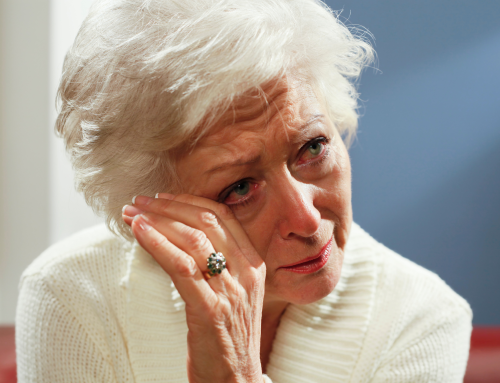
Clinicians routinely encounter patients who are doing everything “right”—adhering to treatment, staying informed, maintaining a positive outlook—yet feel depleted, ashamed of their distress, or isolated in their suffering. They may worry that needing reassurance, feeling overwhelmed, or depending heavily on others reflects a personal weakness rather than a predictable response to vulnerability. This moralization of coping deserves closer scrutiny.
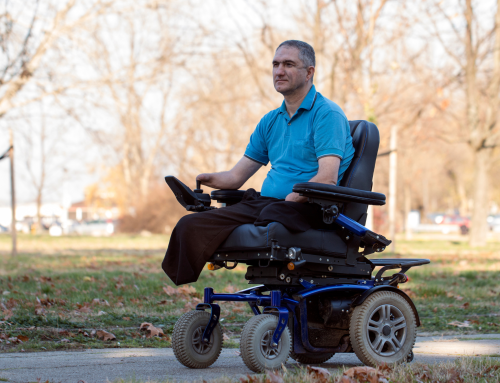
Illness exposes something we often work hard to conceal: the self is not self-sufficient. The body’s reliability is shaken, and with it the illusion of independence that modern culture prizes. Fatigue, pain, and uncertainty narrow one’s world, not only physically but socially. Roles shift. Reciprocity becomes uneven. The patient is forced into a position of dependence—on clinicians, family members, and systems that are often fragmented or impersonal.
From a relational perspective, this is not a psychological failure. It is a human reality.
Coping, in this light, is less about mastering one’s emotional responses and more about navigating altered relationships. Patients must renegotiate who they are when productivity declines, when care is received more than given, and when the future becomes uncertain. Distress often arises not simply from symptoms, but from disruptions in belonging: feeling like a burden, falling out of sync with healthy peers, or sensing that one’s illness makes others uncomfortable.
Medical settings, however, often reinforce the isolated self. Appointments are brief. Responsibility is placed on the patient to monitor symptoms, manage medications, and make complex decisions—sometimes while cognitively or physically compromised. Even language reflects this stance: patients are praised for being “independent,” “compliant,” or “good historians,” while those who struggle may be labeled “difficult” or “anxious.”
A relational view reframes these encounters. What looks like noncompliance may reflect coping with overwhelming or unspoken fear. Repeated reassurance-seeking may signal a lack of relational containment rather than excessive anxiety. Withdrawal may be less about depression and more about the erosion of social roles that once anchored identity.
Importantly, coping does not improve simply by exhorting patients to be stronger or more positive. For many, resilience emerges through reliable connection: a clinician who remembers their story, a caregiver who can tolerate helplessness without irritation, a system that reduces rather than amplifies uncertainty. These relational experiences restore a sense of being held in mind, which can be as stabilizing as any medication.
This has implications for clinical practice. Small gestures matter more than we often realize. Consistency, clear communication, and acknowledgment of dependence can significantly reduce distress. Naming the emotional impact of illness—without immediately attempting to fix it—can help patients feel less alone with experiences they may otherwise interpret as personal inadequacy.
For patients with chronic illness, especially, the goal is not adaptation in the sense of returning to a previous self. It is the gradual formation of a livable identity that includes illness without being entirely defined by it. This process unfolds socially. Patients borrow language, expectations, and hope from those around them. When these relational supports are absent, coping becomes a solitary and exhausting task.
Reconsidering the self as fundamentally relational also softens how we think about autonomy in medicine. Autonomy need not mean managing everything alone. It can include choosing who to rely on, when to ask for help, and how much uncertainty one can bear. Supporting autonomy, then, may involve strengthening networks rather than narrowing responsibility.
In a healthcare culture increasingly focused on efficiency and individual accountability, this perspective offers a helpful perspective. Patients are not failing to cope because they need others. They are coping as humans do—through connection, responsiveness, and shared meaning.
Perhaps the most compassionate shift medicine can make is not to teach patients how to be stronger selves, but to recognize how profoundly illness reveals what was always true: the presence of another helps us endure.
About the Author
Dr Gavril Hercz

Dr. Gavril Hercz is a nephrologist at Humber River Health and Associate Professor of Medicine, University of Toronto. He completed his psychoanalytic training at the Toronto Psychoanalytic Institute and is a member of the Canadian Psychoanalytic Society. His major area of interest is the impact of physical illness on patients, families, and caregivers.
Illness exposes something we often work hard to conceal: the self is not self-sufficient.