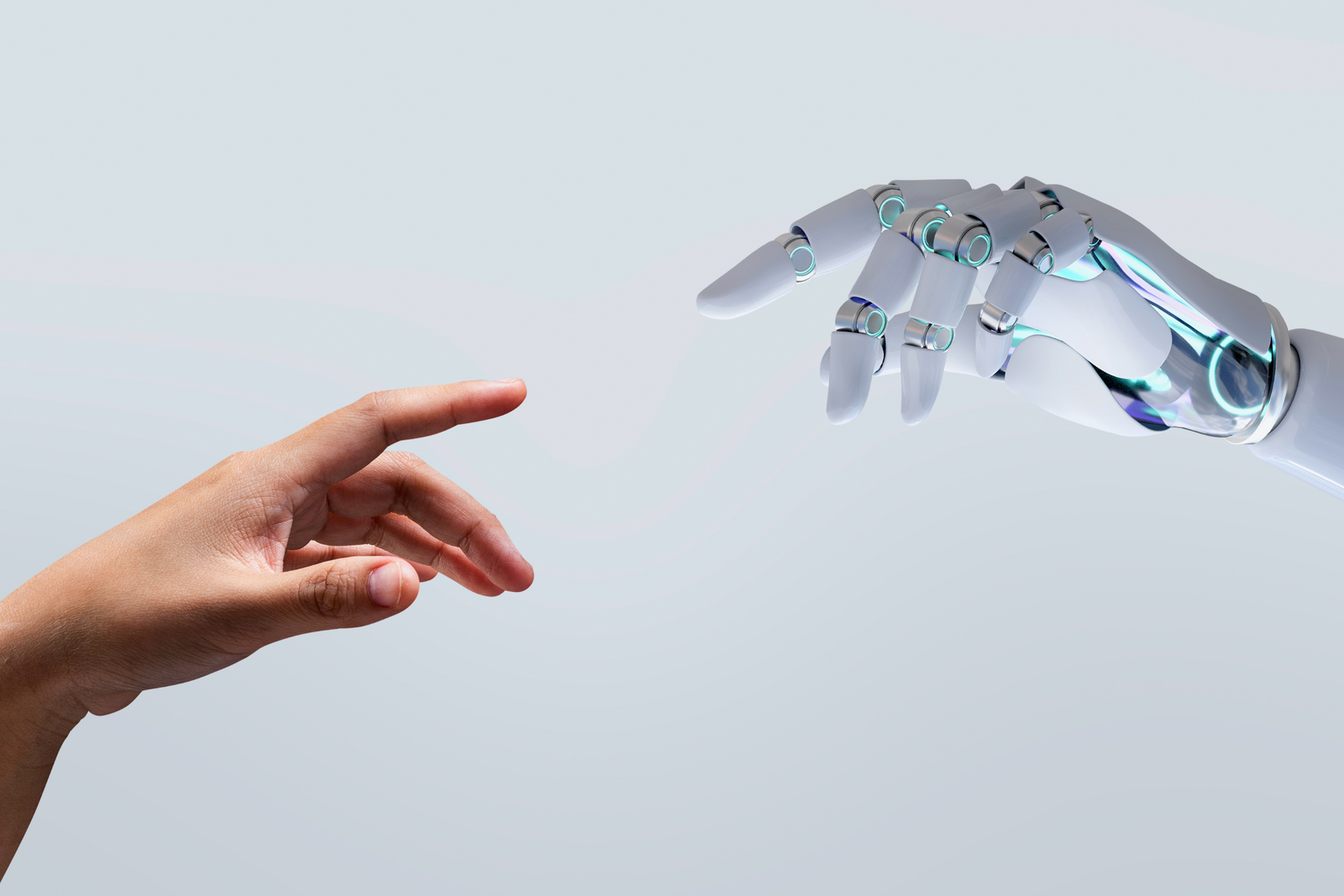
AI: What Must Remain Human
Two influential voices offered complementary warnings about artificial intelligence this week. Historian Yuval Noah Harari, in a recent interview with The Economist, and Bill Gates, in his latest reflections on AI, approach the subject differently. Yet both point toward the same fundamental question: What happens to human beings when machines become capable of doing more and more of what we once considered uniquely human?
Harari’s concern is not simply that AI might become “evil.” It is that humans may gradually surrender control of institutions, decisions and even relationships to systems capable of processing information and influencing behaviour at unprecedented scale. His deeper warning is psychological and political: if technological change is treated as inevitable, we may stop asking whether every capability should actually be used.
Gates approaches the problem more pragmatically. AI could dramatically improve productivity, education and healthcare, but it could also disrupt employment and deepen inequality. The question is not whether AI will transform society—it will—but whether we deliberately shape that transformation around human needs.
As Gates highlights, nowhere is this more consequential than in children.
Children do not merely need information. They need to struggle with questions, make mistakes, become frustrated, negotiate disagreement and discover answers for themselves. Deep thinking is partly built through effort. If AI provides an immediate answer to every question, writes every first draft and resolves every intellectual difficulty, children may become more efficient learners while becoming less practiced at learning itself.
There is also a psychodynamic dimension. Part of growing up is learning to tolerate not knowing. Curiosity develops in the space between the question and the answer. Frustration, uncertainty and waiting are not simply obstacles; they are experiences through which a child develops thought, imagination and psychological capacity.
If technology continually removes that discomfort, we may inadvertently encourage a culture of immediate gratification in which uncertainty becomes intolerable.
Human relationships are equally formative. A child develops a sense of self through interaction with other minds—through being understood, misunderstood, challenged, disappointed and repaired. AI can simulate responsiveness, as evidenced by growth of therapy bots, but it does not participate in a genuinely mutual relationship. The risk is not that children will mistake machines for humans overnight. It is subtler: they may gradually become less practiced at the complexity of human relationships.
The same psychological dynamic applies to adults. Faced with uncertainty, human beings naturally seek something or someone that can provide certainty. AI is extraordinarily attractive in this respect. It can become an external authority to which we unconsciously outsource doubt, judgment and responsibility.
The convenience is real. So is the danger.
Clinical medicine may provide the most important test.
AI is already transforming diagnosis, imaging, risk prediction and clinical decision-making. For people living with serious or chronic illness, this may mean earlier diagnosis and better treatment. Yet illness is not only a biological problem.
A patient confronting cancer, kidney failure or another serious illness is also confronting uncertainty, dependency, fear and questions of identity and mortality. In such moments, the clinician is not merely a processor of medical information. The clinician becomes part of a profound relationship with a patient—a person who can contain anxiety, tolerate uncertainty and help transform overwhelming experience into something that can be thought about.
This is one of the deepest distinctions between information and care.
AI may tell us what is statistically likely. But caring for an ill person also means listening to what cannot be reduced to data: what the illness means to that individual, what they fear, what they value and what they are able to bear.
The issue is not that technology is dangerous because it is intelligent. It is that human beings may use intelligence to defend themselves against uncertainty, dependence and emotional complexity. As Yuval comments, we also have to differentiate intelligence from consciousness.
We should therefore welcome AI where it expands human capability while protecting the experiences through which human capability itself develops.
Some things should remain deliberately human: the struggle to learn, the freedom to think, friendship, disagreement and repair, the formation of judgment, the relationship between teacher and child, patient and therapist, and the presence of one human being beside another in suffering.
The question is not simply, How intelligent will AI become?
It is:
As our machines become more intelligent, how do we ensure that human beings remain capable of thinking, relating, tolerating uncertainty—and caring for one another?
That may be the defining psychological question of the AI era.
About the Author
Dr Gavril Hercz

Dr. Gavril Hercz is a nephrologist at Humber River Health and Associate Professor of Medicine, University of Toronto. He completed his psychoanalytic training at the Toronto Psychoanalytic Institute and is a member of the Canadian Psychoanalytic Society. His major area of interest is the impact of physical illness on patients, families, and caregivers.
If technology continually removes that discomfort, we may inadvertently encourage a culture of immediate gratification in which uncertainty becomes intolerable.