A Quiet Practice of Gratitude at the Edge of Life
Gratitude often appears to us as a soft virtue—pleasant, uplifting, something to cultivate when life is calm. But for many people, genuine gratitude arrives not in moments of ease but in less quiet spaces that form at the edges of life: when health falters, when time feels condensed, when identity shifts, or when one confronts the finitude of being human. In these threshold moments, gratitude becomes less an exercise and more a form of clarity.
One of the most compelling accounts of such clarity comes from individuals who, facing serious illness or advanced age, begin to take stock of the shape of their lives. It’s not uncommon for someone who has lived through medical crises to report that their perspective sharpens—colors seem deeper, small experiences feel amplified, and relationships take on a new texture. Gratitude becomes a way of seeing, rather than a mood. It is not a denial of suffering; it is an acknowledgment of the astonishing gift of being able to feel and experience anything at all.
When people reach these reflective stages, they often describe having two parallel emotional streams. One carries the sorrow of limitation—what can no longer be done, what was lost, what will not return. The other carries a profound appreciation for the very same life that contained those losses. These feelings can coexist without cancelling each other out. In fact, their coexistence is what deepens the experience. Gratitude in this form is textured, nuanced, and emotionally complex.
In clinical work—whether with patients navigating chronic illness, families facing tragic diagnoses, or individuals dealing with the complexities of aging—this layered form of gratitude often surfaces spontaneously. It is rarely forced. It emerges when a person begins to integrate their story, not just recount its events. This integration allows them to inhabit their life narrative with a sense of coherence and dignity. Even in the presence of hardship, there is a recognition of the small wonders that made the journey rich: an unexpected friendship, a moment of forgiveness, a body that—despite everything—carried them through decades of experience.
One of the most moving insights shared by those who have lived near the horizon of mortality is the discovery that gratitude is not passive. It is active engagement with reality. It says: I see what is here, even now. This stance doesn’t require that the present be easy. It only requires honesty. And the honest view frequently includes the astonishing beauty in everyday life—sunlight through a window, a familiar voice on the phone, being recognized on the street.
There is also something deeply human about wanting to place one’s life into the world as a gesture of thanks. Many people, especially toward the later chapters of life, develop a renewed desire to contribute—through writing, teaching, mentoring, or simply by being present with more intention. Gratitude becomes generative. It seeks expression, not as self-erasure but as a continuation of relationship with the world.
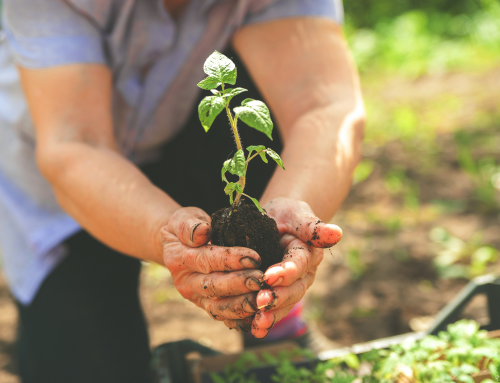
Psychologically, this emergence of generativity is vital. It provides a sense of connection that transcends the boundaries of one’s physical lifespan. People may plant trees they will never see fully grown or guide younger colleagues who will continue the work long after they are gone. These acts create meaning, and meaning strengthens emotional resilience. They remind us that even though individual life is finite, participation in the human story extends beyond one’s own years.
Another powerful dimension of gratitude at life’s threshold is the invitation to simplicity. Many people, when time feels suddenly more precious, describe the sensation of shedding layers—old grudges, unnecessary anxieties, or ambitions that no longer feel authentic. Gratitude redirects attention toward what sustains rather than what exhausts. It encourages presence over accumulation. In psychotherapy, these shifts often accompany a profound sense of psychological maturation, the kind that occurs when someone moves from asking “What do I need to prove?” to “What do I want to appreciate?”
For caregivers and health professionals, these reflections offer an important reminder: even in the most medically complex situations, emotional life continues to unfold with remarkable depth. A patient may be confronting overwhelming fear or fatigue yet still experience moments of expansiveness—memories that warm them, connections that anchor them, gratitude that steadies them. Supporting these experiences can be as therapeutic as any technical intervention. It humanizes the clinical encounter, allowing space for both vulnerability and strength.
Gratitude, then, is not a sentimental gloss over the realities of illness or aging. It is a deeply grounded stance toward existence. It recognizes that life is extraordinary precisely because it is finite. That the ability to think, to feel, to love, to create, and to reflect is astonishing. And that even in the midst of uncertainty, the simple miracle of having been alive at all is something to cherish.
As we consider our own lives—whether we are facing illness, supporting someone we care about, or simply navigating the day-to-day complexities of being human—there is value in pausing to acknowledge what has shaped us. Gratitude does not ask us to ignore our struggles; it asks us to hold them alongside our blessings. Doing so allows us to inhabit our lives with more fullness, more presence, and more compassion—for ourselves, for others, and for the fleeting, experience of being here.
About the Author
Dr Gavril Hercz

Dr. Gavril Hercz is a nephrologist at Humber River Health and Associate Professor of Medicine, University of Toronto. He completed his psychoanalytic training at the Toronto Psychoanalytic Institute and is a member of the Canadian Psychoanalytic Society. His major area of interest is the impact of physical illness on patients, families, and caregivers.
Gratitude redirects attention toward what sustains rather than what exhausts. It encourages presence over accumulation.